WJ Gould Law

Arizona Bad Faith & Underpaid Claim Lawyer

A lowball isn't a take-it-or-leave-it — it's a contract dispute over the scope, and delay or a bad-faith denial can add remedies the policy alone doesn't. WJ Gould Law reviews the carrier's estimate free and takes on the fight on contingency.

Free bad faith & underpaid claim claim review

No fee unless we recover. A straight answer within 48 hours.

Or call (602) 396-1658 — 24/7

Submitting does not create an attorney-client relationship. Don't include confidential details yet.

Free Consultation

No cost to talk through your claim.

No Fee Unless We Win

Contingency. Fee from recovery only.

Available 24/7

Storms don't keep office hours.

The carrier’s number isn’t “the number.”

You filed a claim. The carrier accepted it — and then wrote a check that doesn’t come close to what it actually costs to repair the damage. This is different from a denial. Nobody told you no. They told you a number, and the implicit message is: this is what we’re paying, and good luck arguing with us.

That’s not how the contract works. Your policy obligates the carrier to pay the reasonable cost to repair or replace covered damage. When the carrier’s estimate is materially below that cost, it’s a breach of contract on scope — not a take-it-or-leave-it. Arizona law gives you tools: the right to demand appraisal, the right to a supplement when more damage is found, and the right to recover depreciation that’s been held back. We use them.

Five signs the carrier’s number is short

  1. The estimate is more than 20% below a licensed contractor’s written estimate for the same scope.
  2. The estimate was “Xactimate’d” — line items dropped or zeroed out, unit prices below market, no waste allowance, no overhead and profit even on a complex job.
  3. You submitted a supplement for damage found during repair, and the carrier denied it, ignored it, or paid a fraction without a real explanation.
  4. You’re on a replacement-cost (RCV) policy and the carrier treats recoverable depreciation as discretionary, making you fight to release the holdback.
  5. The adjuster went silent after you pushed back. The file is “with management” indefinitely.

When underpayment or delay becomes bad faith

Arizona is one of the stronger states in the country for policyholders, because it treats first-party insurance bad faith as a tort, not just a contract breach. Under Zilisch v. State Farm (2000), an insurer must investigate and evaluate a claim reasonably and promptly pay what it owes — and it “cannot lowball claims or delay claims hoping the insured will settle for less.” A claim being “fairly debatable” is relevant, but it does not automatically excuse unreasonable claim handling.

That matters for your recovery. A straight contract claim recovers the benefits the carrier should have paid. A bad-faith claim can recover more — consequential damages the delay caused, and in cases of especially egregious conduct, punitive damages. And on the contract claim, A.R.S. § 12-341.01 lets the court award your attorney’s fees. Together, those change the leverage: the carrier is no longer just risking the number it already owes.

What happens when you call us

  1. We compare the carrier’s estimate to your contractor’s, read your policy declarations, and identify the specific line items, depreciation, and supplements in dispute. Free.
  2. Within 48 hours we call you with a straight read: how much money is actually on the table, and what it would cost to go get it.
  3. If we take the case, you sign a contingency-fee agreement. No fee unless we recover.
  4. We pick the cheapest path to the right number — sometimes a demand letter and a corrected payment, sometimes appraisal, sometimes litigation with the bad-faith claim attached.

If your claim was denied outright rather than underpaid, start with our denied-claim page.
The check didn't match the damage?

Talk to an attorney who handles only first-party property insurance claims. Free consultation. No fee unless we recover.

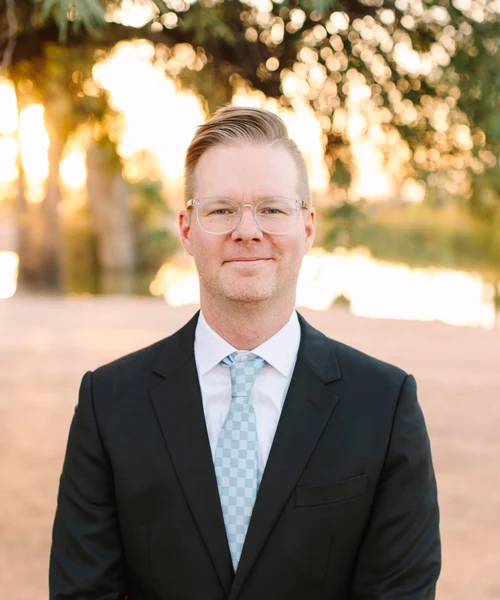
Attorney William J. Gould, WJ Gould Law

Attorney William J. Gould

Founder, WJ Gould Law PLLC. Admitted in Arizona and Minnesota.

Bill Gould founded WJ Gould Law to stand up for homeowners treated unfairly by their insurance companies. After seeing friends and family shortchanged following storm damage, he committed his practice to leveling the playing field for policyholders.

JD from Mitchell Hamline School of Law. MBA from Iowa State University. Undergraduate degree from the University of Wisconsin. Admitted to practice in Arizona (2021) and Minnesota (2021).

Every case is handled personally — no junior associates, no call centers, no handoffs. That's a deliberate choice about the size and shape of the practice.

Read Full Bio

Frequently asked questions

What is insurance bad faith in Arizona?
Arizona recognizes first-party insurance bad faith as a tort. Under Zilisch v. State Farm (2000), an insurer must investigate and evaluate a claim reasonably and pay promptly what it owes — it cannot lowball claims or delay them hoping the insured will settle for less. The fact that a claim is 'fairly debatable' is relevant but not always enough to defeat a bad-faith claim if the carrier handled it unreasonably. A bad-faith claim can recover more than the policy benefits, including consequential damages and, in the right case, punitive damages.
I already cashed the check. Did I waive my rights?
Almost certainly not. Carriers issue claim payments routinely without 'full and final settlement' language, and even where a payment carries such a notation, courts often treat a unilateral notation by the carrier as insufficient to waive a homeowner's contractual right to additional payment. The real questions are what the policy says, what the payment letter says, and whether you signed a written release. If there's no release, you usually have room to pursue the rest.
What is 'Xactimate' and why does the carrier keep citing it?
Xactimate is the software the insurance industry uses to estimate repair costs. Its unit prices are populated by the carrier industry and have historically run below what licensed contractors actually charge — especially in fast-moving markets like Phoenix. Carriers cite Xactimate output as if it were gospel; it isn't. Your contractor's actual written estimate is at least as relevant, and we use it to show the gap.
What's the difference between a lowball and a denial?
A denial says 'no, we won't pay.' A lowball says 'yes, but here's a fraction of what you need.' Legally, a lowball is a breach of contract on scope — the carrier accepted coverage but failed to perform its obligation to pay the reasonable cost of repair. It's often a faster fight than a coverage denial, because the carrier has already admitted the claim is covered; the only argument left is the number.
Can I recover my attorney's fees?
On a successful contract claim against an insurer, Arizona law allows the court to award reasonable attorney's fees under A.R.S. § 12-341.01. That shifts the economics of the fight in the policyholder's favor and is one reason carriers often correct a lowball once counsel is involved.
What does it cost to hire WJ Gould Law?
Nothing up front. The initial review is free. If we take the case, our fee comes out of the recovery on a contingency basis — not from your pocket. If there's no recovery, there's no fee.

Free consultation. No fee unless we recover.

Tell us about your claim. We'll review the loss, the policy, and the carrier's position — at no cost.

Call: (602) 396-1658 (24/7)

Email: [email protected]

Location: Mesa, Arizona (consultations by appointment)

Contact form

Submitting this form does not create an attorney-client relationship. Do not include confidential information until a relationship is established in writing.